Daily Journal 📓

Short dated entries, links, and microblog-style notes.

Added the journal feed in the link header of all pages so it can be auto-discovered.

Pleasantly surprised to be digging into the IPFS _redirects spec. I guess I can just point to my old archive! /archive/* https://2023.bmannconsulting.com/archive/* 301

Made a BMC page where some TO DO stuff will live.

How many times have I ended up using this JSON Feed#Jekyll JSON Feed Templates? Many times! The special treatment for link front matter has me thinking.

Decided to not mess with feed format right now. It’s working, let’s use it for a bit, and see how various things look once they cross-post through Micro.blog to Mastodon. Where it’s actually putting content on my under-used @[email protected] account.

Added a Journal layout template.

  • Removed LogSeq note site links
  • Added tag display from blog posts layout, which links to /notes/tag (but can’t tell if it exists or not, so might 404)
  • Added via link to the sidebar
  • Used Link as the title if it exists

And I guess this will be a test of what large journal cross-posts do!

Update

Got Redirects working correctly! So https://bmannconsulting.com/blog/2021/02/13/drop-in-audio/ should redirect to https://2023.bmannconsulting.com/blog/2021/02/13/drop-in-audio/ (same theme, so won’t even look that different).

And cross posting of large posts works just fine, with a link back to the post. Nice!
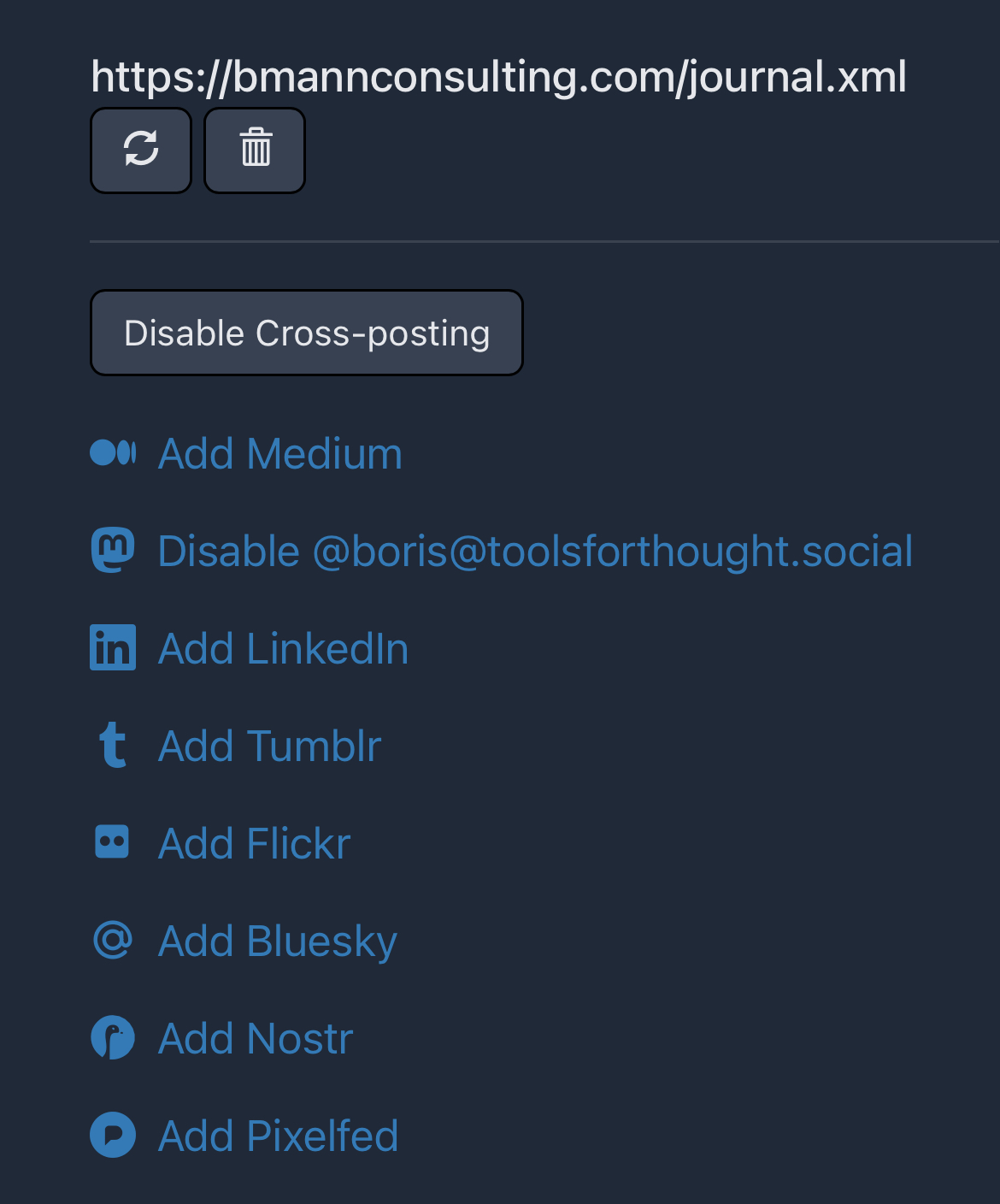


One more journal post! Micro.blog lets you add multiple feeds, and you can set custom cross posting for each feed.

This means I have connected the Journal feed up to my @[email protected] account.

Screenshot of Feed + Crossposting in Micro.blog


Ok, final post of the day now that I’ve learned about Obsidian nuances with Daily notes vs Unique note creator.

I do want to open up a Daily note when I open. But, I want to just use the same format as the Unique note creator so all the files have the same format.

As it turns out, because I made unique page names with a timestamp, the daily journal button effectively becomes a new unique note creator!

The Liquid template for the Journal page then loops through and groups all the posts by day, so you can read them all together, but with permalinks for each one. You can see it in action on the Journal page.

I think it looks pretty good! Maybe even interesting enough to put on the home page?


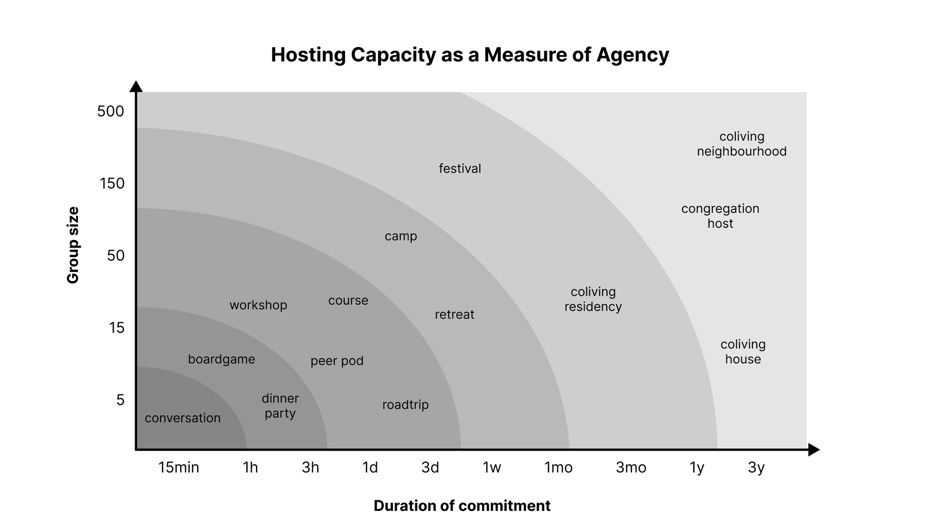
Hosting capacity as a measure of agency

Hosting capacity as a measure of agency

I drew this diagram to illustrate a lot of related insights about agency, hosting, community-building, collaborative leadership & social change

you can use this map to self-evaluate your level of agency: where are you currently? what group experiences do you feel comfortable to host? what feels very doable? what would feel like a tolerable stretch? what would be overwhelming even to attempt?

via Richard D. Bartlett @RichDecibels


I set up Working Copy so I can use Obsidian on my phone with git syncing / publishing. I always forget the order of steps.

  1. Make Obsidian vault on mobile
  2. In Working Copy, clone the git repo
  3. Looking at the repo in Working Copy, click on Repository / Status and Configuration
  4. Click on the disclosure arrow for the repo title, select Link Repository to and select Directory

This “day” should have two other entries, with YYYY-MM-DD_HHmm titles.


I point people at Robert Merki’s Wildcard definition often enough I should have an entry here.


  • Examining crypto’s product-market fit by polynya #crypto
    • A primer, first. Public blockchains are centralisedunfair, and inefficient. For almost everything, they are useless, if not outrightly dangerous. Humans and our societies are extremely complex and nuanced, and expressing subjectivity is simply not possible with blockchains. However, for a couple of things, they are invaluable, and the only way to achieve them. Broadly, these are usecases that require strict global consensus, something objective money and objective identity require. With that said, let’s get right into the usecases


  • The platformisation of software development: Connective coding and platform vernaculars on GitHub #Github #opensource
    • I’m still tracking down Open Source 2.0 as a concept. This mention of “post-F/OSS” is perhaps one example
    • They propose the concept of post-F/OSS to describe a platform culture that co-exists alongside F/OSS and proprietary coding. This comprises widespread practices of publicly posting mundane code projects without a licence and with little to no documentation to help users understand these projects. According to Fuller et al., this ‘general indifference to the discussions of and loyalty to certain kinds of licences and the sense of ethics (GPL) or business models (Open Source) that these drew upon’ (2017: 58), marks a departure from the F/OSS movement’s practices.

  • How could open licensing protect democracy? #licensing #EUPL
    • The EUPL is new to me, a good read

  • Ben Yoskovitz writes about Venture Studios #future of venture on LinkedIn
    • Venture studios are emerging as a legitimate asset class. It’s an interesting way of thinking about it, because it warrants further clarity and definitions, without being overly prescriptive.
    • Created Venture Studio Checklist, a GSheet working through different models
        1. Internal Company Structure and Methodology: This covers how you’ll structure your studio, how you’ll work (including the framework/playbook/process you’ll use for validating startups) and the makeup of your team.
        1. The Founders: Next, you deep dive into the founders you’ll recruit: who they are, how you find them, compensation, etc.
        1. Startup Structures: This section focuses on how you’ll structure new startups emerging from your venture studio. This is a complicated section because it focuses on investment and equity, two hot button topics.
        1. Venture Studio Business Model: The final section covers the studio’s finances and business model, with different options for raising capital into the studio entity or a fund (or both). This is also complicated because studios don’t survive on management fees alone (or at all). The Venture Studio Checklist is free to use — just make a copy (it’s a Google Sheet) and start filling it in. I hope it helps people understand all the components of designing, building & launching a studio.


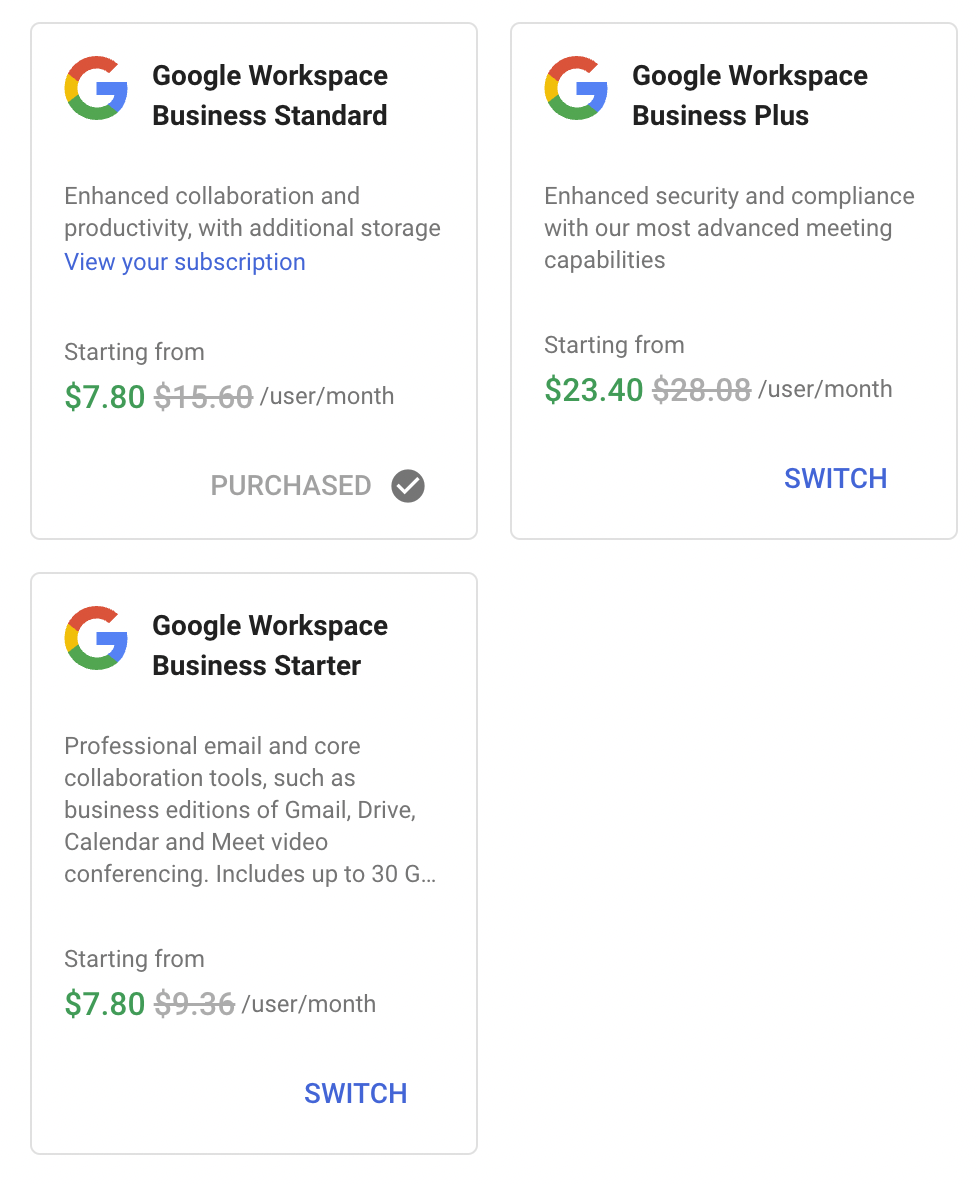
  • I’m trying to consolidate various accounts and charges for digital things I pay for
    • Looking at Google Workspace aka Google Accounts, I have one paid for Google account
      • It’s on Business Standard, which is $17.47CAD / month, including taxes
      • I don’t know why it’s showing this discount in the screenshot
        • Screen Shot 2023-11-08 at 2.06.52 PM.png
      • The difference between Standard and Starter, is that Starter maxes out at 30GB of storage per user
      • Looking at how much storage I use, it’s not much. The photos in there are legacy, I never seriously used Google Photos
        • Screen Shot 2023-11-08 at 2.09.45 PM.png

  • Applied to attend Autonomous Worlds/2023 at Devconnect Istanbul
    • Here’s what my submission said:
      • Which of the following best describes you?
        • Game Developer
        • Enthusiast
        • Academic
        • Artist
        • Designer
        • Writer
        • Crypto Developer
        • Other (please specify)
          • Founder, Community Builder, Governance Whisperer
      • Written Application
        • Autonomous Worlds and digital first shared communities are increasing in importance. I’ve been building open source, online, and in person communities for 20 years, and I want to discuss and ground how communities participate, own, govern, and enjoy digital spaces together. How can digital spaces inform physical spaces and create strong ties that lead to resilience at regional and global levels.
        • Areas of interest:
          • platforms vs protocols
          • community ownership
          • supporting both strong and weak ties
          • hybrid events and spaces
          • mobile first experiences
          • digital governance, voice and exit, user owned data