Landed in Denver. I’m here for the week attending EthDenver and the many community side events happening. Talking to people about Fission’s Everywhere Computer.
Feb 202412:46pm
Shorter dated entries, links, and microblogs, plus GitHub & Tangled stars.
Landed in Denver. I’m here for the week attending EthDenver and the many community side events happening. Talking to people about Fission’s Everywhere Computer.
I think the word bridge is now at the level of trigger word for people.
What if I call Misskey a bridge to Mastodon?
It means something socially and technically to some group of people which is disconnected from how it works.
Networked communications are absolutely social discussions — not just tech.
But if you disregard how the tech actually works, you’re not going to get very far with social discussions either.
Steve Klabnik writes up his own take on How does Bluesky work
I think the separation of concerns between atproto and BlueSky are very meaningful, as having a “killer app” for the network gives a reason to use it. It also is a form of dogfooding, making sure that atproto is good enough to be able to build real applications on.
Rui Carmo writes up his experiences with LLMs etc in Living with our machine sidekicks. Here’s his comment on trying to import his 20 year old digital garden:
In my experience, summaries for personal notes either miss the point or are hilariously off, suggestions for related pages prioritise matching fluff over tags (yes, it’s that bad from a knowledge management perspective), and “chatting with my documents” is, in a word, stupid.

Congrats to the Bluesky team on opening up federation yesterday! Read the blog post announcement
I almost got a PDS up and running yesterday for my birthday.
I’ve been talking to Nathan Schneider and Robin Berjon about running a co-op PDS, Sky Coop.
Manton from Micro.blog intends to enable the service as an atproto PDS:
The long-term plan for Micro.blog is to fully support AT’s PDS — Personal Data Servers. Any blog hosted on Micro.blog would plug into Bluesky seamlessly, with data portable to other AT Protocol hosting providers.
Micro.blog already functions as an ActivityPub server, and currently supports cross-posting to Bluesky.
Following on Paying people to work on open source is good actually, Chad Whitacre proposes Software Commons as the big tent definition of open source in his post Towards Software Commons.
From the Wikipedia definition:
The software commons consists of all computer software which is available at little or no cost and which can be reused with few restrictions. It includes open source software which can be modified with few restrictions. However the commons also includes software outside of these categories
I like it!
Blog tinkering on my birthday ✅
The aliases field in notes are now used to generate the lines of the IPFS _redirects file. View source on Github
There are 14 JavaScript runtimes, via @wesbos.
This was a glitch post that I didn’t end up publishing, but the link made it through my RSS pipes and got posted. So I’m retconning the link that got posted.
Let’s make a JavaScript Runtimes notes page for this info to live.
Rosano writes an encryption rant as he attempts to backup and transfer data from a handful of apps:
there’s no feigning moral superiority in using ‘alternative tech’ until it includes a real foundation to stand on for people without this domain expertise.
Bryan Cantrill, CTO of Oxide Computer, Moore’s Scofflaws:
software costs can potentially absorb the entire gain from a next-generation CPU…software vendors never would have been allowed to get away with charging by the gigahertz; we should not allow them to feel so emboldened to charge by core count now!
Signal is adding usernames to protect visibility of phone numbers. Usernames are effectively a privacy work around, not a social feature:
Signal usernames are not logins or handles that you’ll be known by on the app – they’re simply a quick way to connect without sharing a phone number.
They also go on to describe that they’re easily changeable/disposable to share with different groups over time.
The Signal Wiki documents the generation of nicknames and UUID-based links (links don’t publicly display your username)
“We have lost the ability to do RAD (Rapid Application Development) due to the prevalence of web applications” says Rui Carmo.
He has a page collecting his research on Native Development
Apple detects Mastodon with a link tag — but then still uses OpenGraph to load the preview for iMessage. Any app that has a Mastodon shaped link tag can thus get rich previews.
Deltachat blog post about updated webxdc docs and sample apps
Like Farcaster Frames, webxdc “messenger apps” are interesting to me as it combines distribution with new app functionality.
Tom Critchlow writes up notes on his Remarkable Tablet. I have a reMarkable tablet myself and think Tom’s suggestions are pretty great.
I’d also love a more formal diary / daily entry system. Kind of like Obsidian’s daily notes. Some kind of date-based notebook inside the Remarkable would be rad
Notes, daily entry, and sync as core primitives are very powerful.
I pre-ordered a stealth tablet a couple of years back and then wrote a post about Kickstarting an app ecosystem which suggested similar things.
Apparently reMarkable is only getting more tied to mandatory, single source subscription services, which is not a great way to build an ecosystem around a device.
The Polkadot ecosystem has defined salaries and grades for fellowships. Via Dietrich, who put together background context on Parity/Polkadot decentralization.
Fits my open source as a job thinking, and is roughly what I suggested when I was working in the Ethereum core ecosystem: $10KUSD per month is a decent engineer salary.
I spent way too much time this past week being annoyed and disappointed at the hate thrown at Bridgy Fed developer Ryan Barrett, connecting ActivityPub to Bluesky’s ATProtocol.
Sean Tilley has a great opinion piece on We Distribute that does a good job of summarizing.
OWA on Apple killing web apps in the EU
This feels … complicated. There are new browser engines allowed in the EU.
You can still have a Home Screen “bookmark” & it will open in the browser of your choice.
Any of the new browsers — including Chrome or Firefox — could be a great host for PWAs on iOS now, decoupled from Safari versions.
Jacob Kaplan-Moss writes Paying people to work on open source is good actually which very much matches my thoughts so I’m clipping it to my local notes.
I’ll share a handful of quotes:
“Yelling at maintainers who’ve found a way to make a living is wrong.”
“Open source is good for humanity…I want people who want to work on open source to be able to do so, and should be able to live comfortable lives, with their basic needs met.
I’ll even use the terms “open source” and “free software” interchangeably just to hammer home how, in this context, the precise definitions of these terms don’t matter to me
One of the core things that I’m ready to fight for alongside Jacob is that “lower case” open source should be a bigger tent than OSI-approved Open Source™️ licenses, and it’s what I mean when I use the term.
if my sloppy use of these terms bothers you in the context of talking about how people make their living, it implies that you care more about terminology and definitions than about the people, and I’d like you to sit in that discomfort for a while
Read the whole thing.
Great read about the recent Mastodon CVE (which could allow taking over and forging content for remote accounts).
I’m quoting a bit here about open source:
how people seem to only care for the ‘gratis’ of free software, and seldom the ‘libre’, and millions of users leaning on the work of primarily a couple developers, assuming they have the attentiveness to catch every mistake themselves alone
There aren’t enough funded people - both teams and individuals - working on Fediverse software, and both the users and the admins seem averse to paying for it.
⭐️ mary-ext/skeetdeck Alternative web client for Bluesky
⭐️ mimonelu/klearsky Klearsky is a web client for Bluesky.
Ink & Switch lab notebook for new Patchwork project. First post, Universal Version Control:
“We believe that simple, powerful, universal version control tools could help all kinds of creators produce better work. Perhaps this is even built into the storage layer of your OS! That’s the vision for this Ink & Switch research project, codenamed Patchwork.”
Oh look at this! Just found out that Ton Zijlstra is involved in PKM Summit 2024 (aka Personal Knowledge Management, aka Digital Garden / Second Brain).
Late March in Utrecht, NL, around the same time I’m planning Causal Islands LA.
Dare Obasanjo says paid subscriptions to websites creates a global divide vs ad supported:
“Online advertising is a progressive form of taxation as the rich, mostly US-based consumers who buy goods & services from ads subsidized the internet for everyone else.”
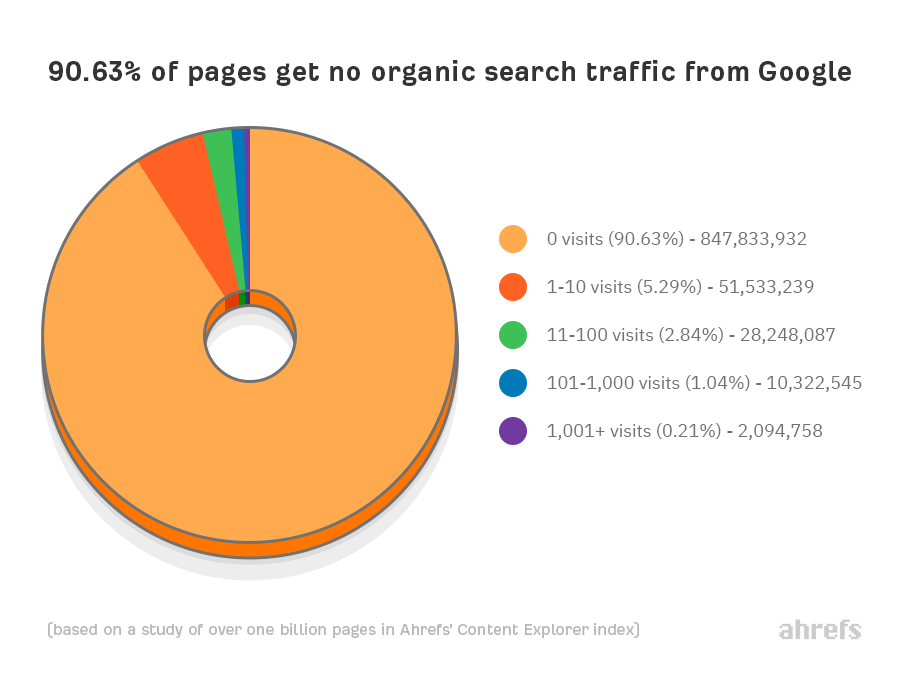
90.63% of pages get no organic search traffic from Google, via ahrefs 59 blogging statistics for 2023
I’ve been reading lots of Apple Vision Pro reviews and chatter.
I spent several years working in AR/VR/XR and tinkered with hand input + interfaces. We knew that mobile OS powered headset was coming from Apple.
Then I watched Apple evolve their UI on Mac and iOS for years, that pointed without a doubt to not being bounded by a screen.
“I say this carefully, because I don’t wish to offend. But if you haven’t used Vision Pro, you probably shouldn’t be writing about it.” – Joe Cieplinski
I’ll get one when they’re available in Canada. Or, uh, maybe on my next trip to the US 😅
I added Networked Orgs and Tooling as my first retroactive blog post. It didn’t feel enough like a note, so I formatted and integrated a few things and published it as a blog post.
Stract, an open source search engine:
”where the user has the ability to see exactly what is going on and customize almost everything about their search results. It’s a search engine made for hackers and tinkerers just like ourselves.”
404 Media, This Guy Has Built an Open Source Search Engine as an Alternative to Google in His Spare Time
Collective Governance Directory:
A collection of links to publicly available governance documents, published by the collectives that use them.
Launched by Doug, who is looking for other collectives to contribute their docs.
Bluesky handles directory lists a breakdown of custom domain names used as account names on Bluesky.
“Just enough leadership injected, when it is needed, where it is needed.”
vgr writes a post on a Management trend he’s seeing, that he calls BDFx-ing.
BDFL (Benevolent Dictator For Life) is a common governance model for many open source projects.
⭐️ boinkor-net/tsnsrv A reverse proxy that exposes services on your tailnet (as their own tailscale participants)
I have a Twitter archive powered by Tweetback. There are apparently 68 Tweetback Canonical archives registered, which will link to the “canonical” URLs of each others archives.
I think Mastodon or Bluesky import is a more likely path for people who really want their archive online.
Bluesky, which will support running your own PDS, seems like a good architecture for this.
Peter Kaminski, Books and NeoBooks
The idea of NeoBooks was never to be about one particular kind of object. It’s about how to use the techniques that we have, social techniques and informational techniques, to help people publish.
I’m getting all nostalgic reading my own blog posts from 20 years ago.
(1) because it was the beginning of being part of the growing Vancouver tech scene; and,
(2) I have 20 year old blog posts still online!
Here’s the IPFS index of my posts from 2004, which probably means they’ll stick around for another 20!
20 years of Flickr. And I just happened to tell the story today of the tech meetup I organized in Vancouver 20 years ago. 6 people came, including Roland Tanglao, who got us all early access to Flickr.
I still have the blog post from the Vancouver Geek Dinner. And some notes on that early full screen Flash-powered version of Flickr. And some sort of Flickr Buddy Icons that still works 20 years later.
“Wherever you get your podcasts” is a radical statement, Anil Dash:
“being able to say, “wherever you get your podcasts” is a radical statement. Because what it represents is the triumph of exactly the kind of technology that’s supposed to be impossible: open, empowering tech that’s not owned by any one company, that can’t be controlled by any one company, and that allows people to have ownership over their work and their relationship with their audience.”
I’m looking for more radical statements.
Next in the tiny hardware series: I bought an ASUS MiniPC PL63. It was on sale, and I wanted a machine that sits at my desk with modern ports.

Brett Cannon, Python core dev:
“When you say or ask for something regarding open source, add “for me” to the end of the sentence. If that makes it sound rude, then consider rephrasing.
Had a great morning at DWebYVR coworking.
We ended up on the top floor of the VPL Central Library and had a bunch of interesting discussions that you can find on the notes page.
The developer of the Graysky client for Bluesky has written up how to embed replies from Bluesky as comments on your blog.
Like I said for Mastodon comments, not going to enable this on my site.
Craig Mod writes “Oh God, It’s Raining Newsletters” (2019), which is a delightful piece of writing with many links that you should read in full, but I will quote a few snippets:
“I fear we’re entering an era of newsletter fatigue…” “the state of newsletters and email, in 2019: Things are unexpectedly amazing” “there’s something about the framing of email — the inbox, that weird neither-here-nor-there networked space” “These newsletters are the most backed up pieces of writing in history, copies in millions of inboxes, on millions of hard drives and servers, far more than any blog post.” “They’re everywhere but privately so, hidden, piggybacking on the most accessible, oldest networked publishing platform in the world.”
via nicoth
Changed the Fedica settings to crosspost to my main Bluesky account @bmann.ca rather than the @bmannconsulting.com account I made. I think I liked the concept of mapping my domain to it’s own username (and the FoodWiki has an account too), but it really just is “me”. The three Mastodon accounts are also a bit much 😅
The late majority needs nothing to change. Early adopters move on to systems where the “new stuff” is available.
Right now, I pay for two open social protocols. For ActivityPub, I pay for my own servers (hosting) and clients (Ivory). For Farcaster, I pay for invites and channels.
atproto, I need Bluesky to get off your butts and launch federation to enable various people to start charging for things.
⭐️ vanishing-page/simple-aes The simplest way to use AES keys in the browser or Node.
As of iOS 17.4, iPhone users in the EU can choose a default browser, details from MacRumors:
Apple said iPhone users in the EU will be presented with a list of the 12 most popular web browsers from their country’s local App Store at the time
Take away: a lot of browsers will be competing for App Store installs.
⭐️ hickory-dns/hickory-dns A Rust based DNS client, server, and resolver
DREAM - Distribution Rules Everything Around Me
Distribution is the product of next gen social protocols, and why app devs are building in support as search and platform social crumbles.
Three quotes from “The Internets Meaning Crisis”, by Kneeling Bus:
The average human living today sees more things they don’t care about in one week than a medieval peasant did in their entire lifetime.
Parasocial media as antidote to AI content:
As AI normalizes the idea of human-free content creation, parasocial media merits appreciation: We gravitate toward work that foregrounds its creator because that person is often the ultimate reason we’re interested in the work, directly or indirectly
Increasingly baroque personal info filter systems:
It’s increasingly urgent to develop an effective personal system for keeping the digital entropy at bay, even if it’s as simple as “haphazardly ignore most of what comes through.”
We’re in the middle of a perfect storm for rollback of the ‘open web’ and burgeoning online surveillance” — that’s just the title of Alec Muffet’s post. He details a long list of issues, with everything from politics to lack of digital literacy by both activists and regulators.
We are in for a rough few years. There will be losses. The “app” ecosystem will likely take a big — possibly majority — chunk out of the “open web” as users demand features which are more easily built without the abstraction of traditional web/web-like services.
Finishing with:
The users will suffer in the middle of this Godzilla battle, but nobody cares about them.
And actual privacy and anonymity will be on the back foot for a decade or more.
Oof. I’m feeling this but don’t want to believe it.
I post about Garage, and then sbc64 follows the links and comes back with wgautomesh, a tool by the same team:
“A simple utility to help connect wireguard nodes together in a full mesh topology”
Excellent! May be useful for some work at Fission.
This FOSDEM talk on Domain: a modular Rust DNS toolkit looks interesting:
The “domain” crate is a Rust library that aims to provide a wide range of building blocks that are necessary or useful when building specialised DNS applications.
In this talk we will look at the history, current state, and future of the crate and how it differs from other offerings in the Rust ecosystem. We will explore how the crate aims to leverage Rust’s type system to make it easier to model the complexities of the DNS in a straightforward way that helps make it easier to build correct and efficient applications.
On GitHub NLnetLabs/domain
Chad Kohalyk writes about fun:
Basically, the most important thing for peak performance is energy. And the way to generate energy is to make sure there is enough FUN in your life. Then you will have the fuel to lean into whatever the problem of the moment is.
Chad works with me at Fission. I’ve been thinking about this a lot in all areas of my life, from work, to community, to family, to individual.
For me personally, I need to have high alignment between what I’m interested in and what I do for work. So I’ve often created my own work to ensure that alignment.
The downside of blurring of lines between stuff that is being done for work, and stuff to tinker with for personal enjoyment.
The Tangara Music Player campaign opened on Crowd Supply today. Yep, I ordered.
I care more about apps, protocols, and files than operating systems.
But plumbing and sewers are important.
It’s the first anniversary of CoSocial.
This is the first co-op I’ve been part of, although I’ve been involved in a number of other non-profits, foundations, and other structures.
I’m gathering, learning, and sharing more info on my co-op notes.